ArrhemBlog – Scholarships information, Schools admission, Study visa processing.

CONTACT US FOR YOUR UNIVERSITY'S ADMISSIONS AND SCHOLARSHIPS.

Breaking

Friday, 8 June 2018

June 08, 2018

Study in USA: Lists of Top Universities In Kentucky With Their Average Tuition Fee.

The USA, apparently is one of the most popular destination for international students. Universities in the US dominate the world rankings and the country also offers a wide variety of exciting study locations. State university systems are partially subsidized by state governments, and may have many campuses spread around the state, with hundreds of thousands of students.

Kentucky is a state located in the east south-central region of the United States. Kentucky is one of four U.S. states constituted as a commonwealth (the others being Virginia, Pennsylvania, and Massachusetts). Originally a part of Virginia, in 1792 Kentucky became the 15th state to join the Union. Kentucky is the 37th most extensive and the 26th most populous of the 50 United States. Kentucky is known as the “Bluegrass State”

If you’re considering travelling to Kentucky for a study program, here are your top schools to choose from.

2018 TOP 7 KENTUCKY UNIVERSITY RANKING

1. University of Kentucky
The University of Kentucky (UK) is a public co-educational university in Lexington, Kentucky. Founded in 1865 by John Bryan Bowman as the Agricultural and Mechanical College of Kentucky. The university is one of the state’s two land- grant universities (the other being Kentucky State University), the largest college or university in the state, and the highest ranked research university in the state according to U.S. News and World Report. The institution comprises 16 colleges, a graduate school, 93 undergraduate programs, 99 master programs, 66 doctoral programs, and four professional programs.
www.arrhemblog.com

The University of Kentucky is located in Lexington, a city in the heart of the state, that is ranked among the top 10 best value cities in the USA

Tuition fee
Average tuition fees per year
Undergraduate
$28,050

Costs per year
Living costs
$14,450


2. University of Louisville
The University of Louisville (U of L) is a public university in Louisville, Kentucky, a member of the Kentucky state university system. When founded in 1798, it was the first city-owned public university in the United States and one of the first universities chartered west of the Allegheny Mountains. The university is mandated by the Kentucky General Assembly to be a “Preeminent Metropolitan Research University”.

www.arrhemblog.com

Tuition and Fees
In-state: $11,264
Out-of-state: $26,286


3. Western Kentucky University
Western Kentucky University is a public university in Bowling Green, Kentucky, United States. It was founded by the Commonwealth of Kentucky in 1906, though its roots reach back a quarter-century earlier.www.arrhemblog.com

Tuition and Fees
In-state: $10,202
Out-of-state: $25,512


4. Eastern Kentucky University
Eastern Kentucky University (Eastern or EKU) is a regional comprehensive university in Richmond, Kentucky. EKU is accredited by the Southern Association of Colleges and Schools. It maintains branch campuses in Corbin, Hazard, Somerset, Danville, Lancaster, and Manchester and offers more than 40 online undergraduate and graduate options.
www.arrhemblog.com

Tuition and Fees
In-state: $9,296
Out-of-state: $19,074


5. Northern Kentucky University
Northern Kentucky University is a public, co-educational university in northern Kentucky located in Highland Heights, seven miles (11 km) southeast of downtown Cincinnati, Ohio. The university is primarily an undergraduate, liberal arts institution, but it also features graduate programs.

www.arrhemblog.com

Tuition and Fees
In-state: $9,744
Out-of-state: $19,104


6. Georgetown College
Georgetown College is a small, private, Christian liberal arts college in Georgetown, Kentucky. Chartered in 1829, Georgetown was the first Baptist college west of the Allegheny Mountains. With a student-to-faculty ratio of 13 to 1, the college offers undergraduate degrees and a Master of Arts in education.
www.arrhemblog.com

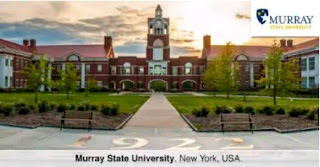
7. Murray State University
Murray State University (MSU) is a four- year public university located in Murray, Kentucky, United States. With about 10,500 students, it has been recognized by U.S. News & World Report‘s “Best Colleges” as one of the top regional universities in the U.S. for 26 straight years. It has consistently been one of the top-ranked public regional universities in Kentucky.
www.arrhemblog.com

Tuition and Fees
In-state: $8,340
Out-of-state: $22,728

For any enquiries please send an email to arhemblog@gmail.com or comment below, thanks.
June 08, 2018

Study in Wales: Bangor University College of Arts & Humanities Fee Waiver Scheme For PHD Students.

The Bangor University is accepting applications for College of Arts & Humanities Fee Waiver Scheme. The scheme is open to students for pursuing PhD programmes for the 2018/19 session.

Bangor University is a Welsh university in the city of Bangor in the county of Gwynedd in North Wales. It received its Royal Charter in 1885 and was one of the founding member institutions of the former federal University of Wales.

www.arrhemblog.com

Degree Level
Scholarships are available for pursuing PhD programme.

Available Subject

Scholarships are awarded in the field of Arts and Humanities.

Scholarship benefits
Full PhD tuition fee waiver, for three years per student.

Eligible Nationalities

Scholarships are open only to UK and EU students.

ALSO READ: Study in Ireland: Maynooth University Taught Master's Scholarships.

Eligibility Criteria
To be eligible, prospective students must fulfil the conditions for doctoral study at Bangor University. Applicants must have completed or be on course to completing a relevant MA or MArts with an average grade of 2:1 or Distinction. The typical start date for PhD study will be 1st October 2018. Other start dates need to be justified, will be considered on a case by case basis and can be no later than January 2019.

This PhD Fee Waiver Scheme only applies to those not already in receipt of any other funding support. Students who are already registered for a PhD course at Bangor University are not eligible. The scheme is open only to UK and EU students (where the status of EU students may be subject to change in the future). Part-time PhD students can also participate in the scheme.

Application Procedure

A full application for study to the University’s Postgraduate Research Programmes
must be submitted using the University’s Postgraduate Online Application Form, indicating ‘CAH Fee Waiver’ when prompted under the funding section of the online form, and identifying the subject area for which they are applying.

Candidates must also submit a completed Fee Waiver Application form. This must be sent to the Postgraduate Admissions Administrator. Each application for a fee waiver must be authorised and approved by the relevant Head of School.

Fill Online application form

ALSO READ: Study in Ireland: Ulster University International Scholarships.


Deadline: June 29, 2018.

For any enquiries please send an email to arhemblog@gmail.com or comment below, thanks.

Wednesday, 6 June 2018

June 06, 2018

Study in UK: University of Sussex, John Kinghorn Scholarship In Engineering.

The University of Sussex is offering The John Kinghorn Scholarships. The scholarships are available to eligible applicants enrolling for any Masters degree taught in the School of Engineering.

The University of Sussex is a public research university in Falmer, Sussex, England. Its campus is located in the South Downs National Park and is a short distance away from Central Brighton. The university received its Royal Charter in August 1961.

www.arrhemblog.com

Degree Level
Scholarships are available for pursuing master’s degree programme.

Available Subject
Scholarships are awarded in the field of Engineering.

Scholarship Benefits
Each scholarship is worth £10,000. The scholarships will be awarded as tuition fee reductions initially with any remainder paid as maintenance.

Number of Scholarships
There are two scholarships available.

Eligible Nationalities
Scholarships are open to international students.

ALSO READ: University of Nottingham Institute for Aerospace Technology Scholarships.

Eligibility Criteria
To be eligible for consideration, you must have been offered and accepted a place on one of the following degrees at Sussex beginning in September 2018: 5G Mobile Communications and Intelligent Embedded Systems MSc 5G Mobile Communications and Intelligent Embedded Systems (with an industrial placement year) MSc Advanced Mechanical Engineering MSc Digital Signal and Image Processing MSc Engineering Business Management MSc Robotics and Autonomous Systems MSc Robotics and Autonomous Systems (with a Masters industrial placement) MSc Robotics and Autonomous Systems (with an industrial placement year) MSc

Application Procedure
Please complete the application form.

Fill Online Application.

Deadline: July 15, 2018.

ALSO READ: Study in UK: University of Bath Euromasters Scholarships For International Students.

For any enquiries please send an email to arhemblog@gmail.com or comment below, thanks.
June 06, 2018

Study in Thailand: Lists Of Universities, Tuition Fee, Costs And Living Expenses.

Thailand formerly known as Siam, is a unitary state at the center of the Southeast Asia. The capital and largest city is Bangkok, a special administrative area. Thailand is bordered to the north by Myanmar and Laos, to the east by Laos and Cambodia, to the south by the Gulf of Thailand and Malaysia, and to the west by the Andaman Sea and the southern extremity of Myanmar. Its maritime boundaries include Vietnam in the Gulf of Thailand to the southeast, and Indonesia and India on the Andaman Sea to the southwest.

Thailand is one of the Asia countries where you get quality education. Approximately 400 master’s degree programs in the country are aimed at international students and are taught in English. Many higher education institutions in Thailand are highly regarded, especially in the areas of environmental studies, agriculture, energy, law and Buddhist studies. In addition, many graduate programs exist in business and management and most of these are taught in English.

www.arrhemblog.com

One good thing to study in Thailand is that it's a bit affordability. While a study in US, Canada, UK, is quite high for a Bachelor degree program or any other study program, your cost of study in Thailand is much lower.

Universities in Thailand Thailand has 80 public universities and 71 private higher education institutions. Of the 80 public universities, 63 are classified as limited admission universities, 2 as open admission universities and 15 as autonomous universities, which include 2 Buddhist universities. Most higher education institutions welcome international students, and about 20,000 foreign students study in Thailand each year. The most popular study areas for international students are Thai and English language, business administration, and international business and marketing.

2018 TOP 10 THAI UNIVERSITY RANKING

1.  Mahidol University

2.  Kasetsart University

3.  Chulalongkorn University

4.  Prince of Songkla University

5.  Thammasat University

6.  Chiang Mai University

7.  Khon Kaen University

8.  Burapha University

9.  Sripatum University

10.  King Mongkut’s University of Technology Thonburi

ALSO READ: 2018 Mahidol Postgraduate Scholarships for Graduate International Students.

Tuition and Program Duration
Tuition and fees vary across universities and programs. Tuition for master’s degree programs at public universities is usually about $1,000 (US) to $2,000 (US) per year. Tuition at private universities is about $75 (US) to $125 (US) per credit hour.


Cost of Education

Amount in THB
146,108
Amount in Euro
3,731
Amount in USD
4,484

Master’s programs generally require two years and 36 credit hours to complete. Students normally earn 9-15credit hours each semester.

Academic Year
The academic year at most schools is composed of two 16-week semesters and a summer session. The first semester runs from June through October, the second semester runs from November through March and the summer semester runs from April through May. Some universities use the Western semester calendar of September through December and January through May, and some universities use trimesters.

Visa Requirements

International students require a visa to study in Thailand; however, in many cases the school that the student is planning to attend can help with the paperwork. Before arriving in Thailand, students must obtain an Education Visa (Non-Immigrant ED visa) from the Thai embassy or consulate in their home country. The Education Visa is only good for 90 days, so after arriving in Thailand student must apply for a one- year student visa, which can be extended for additional one-year periods as needed. The visa fee is THB 1,900 (about 60 USD). After receiving the visa, students must notify the Immigration Office every 90 days of their current address; missing this notification results in a fine of THB 2,000.

Students are also required to demonstrate that they have adequate finances for residing in Thailand during their studies. Single students must show they have THB 20,000 (about 650 USD) and students with families must have THB 40,000 (about 1300 USD).

Cost of Accommodation
Amount in Euro
2,335
Amount in USD
2,807

Cost of Living
Amount in Euro
3,536
Amount in USD
4,250

ALSO READ: King Mongkut's Institute of Technology Ladkrabang. 2018 Scholarship Application for Graduate Programmes.

For any enquiries please send an email to arhemblog@gmail.com or comment below, thanks.

Monday, 4 June 2018

June 04, 2018

Why You Should Study Abroad.

www.arrhemblog.com

1. Take your chance and discover the world

Concentrate abroad does not imply that you will be in one place, accept this open door to know what number of nations are conceivable. Because of the accessibility of excursion design alternatives and modest carriers, venturing to the far corners of the planet has a significantly more moderate cost. The school you pick may likewise have trade programs that expand your universal openings.


2. You will expand your network of contacts

A standout amongst the most widely recognized purposes behind concentrate abroad is contacting with individuals from everywhere throughout the world. The coordinated effort with understudies from different nations is a piece of the dynamic, thus any connection made forms an individual system of contacts with a worldwide reach. Having a decent association with instructors is likewise significant abroad since experience, associations, and guides can be to a great degree helpful amid your vocation.


3. You will get new skills that will be essential

For a few understudies considering abroad is their first chance to live outside of their folks' home. The experience of getting used to another culture and an existence abroad can be overpowering, notwithstanding for post-graduate understudies who used to be autonomous preceding their entry. Rapidly adjusting to another condition won't just test your critical thinking aptitudes, yet in addition refine your relational abilities, trust in yourself and your capacity to adjust.


4. Increase your chances of employment

The fact is that an affair abroad is fantastic to build the employability of a graduate. From accomplishing a more prominent familiarity with a given dialect, getting a positive capability, to gaining abilities, for example, versatility, effective correspondence and intercultural understanding, the time you contribute abroad is a superb chance to build up the educational modules.You can likewise have the chance to get work encounters abroad amid or after your investigations. As per the sort of visa and the nation where you will be, you could land low maintenance position, complete an entry-level position or even proceed with your vacation abroad. Work confinements for understudies differ by area, so it merits completing an earlier examination. In this sense, college counsels will be a significant wellspring of data about expert openings and different approaches to expanding the odds of acquiring work after graduating.

For any enquiries please send an email to arhemblog@gmail.com or comment below, thanks.
June 04, 2018

Don’t Wait Until You Graduate – Ways To Get A Part-Time Job.

Most international students need to hold some kind of job to cover at least of their living or study expenses. So, no worries, you can do this! Here are 8 ways to consider:

www.arrhemblog.com

1.  Part-time job

A part-time job is a great way to cover your study expenses and depending on how well-paid the job is, you can earn some pocket money as well. You can find flexible part-time jobs, enabling you to make your own schedule. From waiting at bar tables, working in a call-center or working on campus to actually being an assistant in a big firm, a part-time job can provide a valuable experience. Consider part-time jobs in your field of interest, but also, look for less obvious alternatives, as these can be great learning experiences that can develop a versatile set of skills.


2.  Summer or winter vacation jobs

In most countries, you can work full- time for three months between academic years. The best part about summer jobs is that you don’t have to worry about the risks of work interfering with your education. The only thing you need to focus on is your job and being very good at it.


3.  Internships
Internships are perfect for developing a successful career in a prestigious company that’s connected to your study interests. Some internships are paid and offer you the opportunity of getting hired after completing your internship. If not hired, you will get good reference for future job opportunities and make connections with people that might become your future work colleagues or partners. Internships are perfect for anyone because you get to know better the field you are looking to learn about.


4.  Work placements

A work placement is a way to gain professional experience in a workplace, usually without being paid. Many are offered by universities as part of degree courses. Grades may depend on your completed tasks during your work placement and you will probably need to complete a project and possibly progress reports as part of the placement. Work placements, sometimes referred to as year placements, are usually taken between your second and final year at the university. Most of the large graduate recruiters advertise placements from early autumn term through to the spring term.


5.  Volunteer Work

Gain experience and industry connections while helping the community! Depending on your degree,/volunteering work can actually be more useful and helpful than a job. Volunteering work can help you better understand social problems and you can contribute to solving at least part of the problem. Your work will not be the only thing highly valued, but you might come up with innovative ideas and help associations or organisations that help prevent various social problems. During a volunteering work, you can meet people that can become credible contact people for future job recommendations or can one day become your employers.


6.  Work shadowing

Spend time and observe one or more professional individuals within a company. With holidays as the best time to undertake work shadowing, you get the chance to gain the understanding for the type of work involved in a certain field. Although it might not often be a paid option, work shadowing may be a unique opportunity for you to gain experience
in a place where paid work experience positions are rare. You will never see advertisers of work shadowing, you will always have to contact the company yourself and negotiate the content and terms of the work. Work shadowing is similar with an apprenticeship, but it is less structured and harder to find. During a work shadowing experience, you will have to always ask questions related to anything you don’t know or understand and sometimes figure out for yourself what are the main secrets of the field or person you are observing.


7.  Insight programmes

Insight programmes are mostly designed for first-year undergraduate students, with the aim to provide an insight into the organisation/company and how they work “behind-the-scenes”. An insight programme is not all the time a work option per se, as it can last from one day to a week and sometimes a little longer.


8.  Casual employee or freelancer

This is a flexible arrangement for you as an employee and for the company as well. Although usually used for short and sometimes irregular periods, you can also work in a long-term arrangement. As a casual employee, you may be asked to work on a short notice and in most cases, you will also be informed on a short notice when your work will no longer be needed. On the other hand, you will get paid a little extra for your working hours in order to compensate for not having a clear contract or arrangement. One common example of casual employment jobs are the telecommute/remote jobs. You can work from home, in front of the computer, on a fixed or flexible schedule. A work from home job can be very convenient, with the condition you have a good internet connection and sometimes, you will have to use the phone as well. The greatest advantage is that you may study somewhere in Europe, but you can actually work for a company based in U.S. or anywhere else. Most of the telecommute jobs include writer, editor, data entry, virtual consultant and customer service representative.


Improve your resume with a student job

With the money you will earn, you could pay back a part of the student loan, pay for your tuition or any other expenses that most students have (accommodation, insurance, etc.). The personal benefits of working while studying are usually greater than the actual income. You will become a more responsible and disciplined person, more self-confident, learn to spend money more carefully and wisely and overall, the experience will certainly turn out to look good on your CV.

For any enquiries please send an email to arhemblog@gmail.com or comment  below, thanks.

Friday, 1 June 2018

June 01, 2018

Study in Denmark: What You Need To Know About Studying In Denmark.

Denmark is one of the most preferred places for international study locations in Europe. Denmark is a Nordic country and a sovereign state. The southernmost of the Scandinavian nations, it is south-west of Sweden and south of Norway, and bordered to the south by Germany.

To study in Denmark, you stand to enjoy a relatively low tuition fee, high-quality English-taught degree courses and innovative teaching methods. Denmark uses the three-tier degree system with bachelor’s, master’s and doctoral degrees. There are four types of institutions of higher education: universities, university colleges, academies of professional higher education and university level institutions that provide instruction in the arts and architecture.

www.arrhemblog.com

Universities in Denmark
There are more than 40 higher education institutes in Denmark, and many offer master’s degree programs. There are eight universities, with some schools offering a range of academic disciplines and other focusing on specialized areas such as information technology, technology, or business. Thirteen university level institutions specialize in all levels of degrees in fine and performing arts, design and architecture. Four of the eleven university colleges also offer master’s degrees, and one of the ten academies of professional higher education offers an MBA program.

2018 TOP 5 DANISH UNIVERSITY RANKING

1.  Aarhus Universitet
2.  Københavns Universitet
3.  Danmarks Tekniske Universitet
4.  Aalborg Universitet
5.  Syddansk Universitet

Tuition and Program Duration
Tuition for all master’s degree programs in Denmark is free for students from EU/EEA nations. Students from other countries can expect to pay about €6,000 to €16,000 per year in tuition. However, many scholarships and grants are available from various public programs, foundations and the institutions of higher education themselves. For example, the Erasmus Mundus program is available to all students for specific master’s degree programs and Fulbright scholarships are available for students from the US.

Nearly all master’s degree programs are two years in length. A few research-oriented technical programs require a thesis in addition to course work.

University tuition fees in Denmark
Higher education in Denmark is free for all Bachelor’s and Master’s students coming from the EU/EEA area and for students participating in an exchange programme in Denmark.

Average tuition fees at Danish universities
You also do not pay for tuition if you have either a permanent or a temporary residence permit or if one of your parents is from a non-EU/EEA country who is already working in Denmark.

Tuition fees for non-EU/EEA students

–Cheapest degrees: fees start from around 6,000 EUR/year.

–Average annual tuition: around 12,000-15,000 EUR/year.

–Highly specialised courses: can reach to over 35,000 EUR/year.

Tuition-free universities for EU/EEA students
Examples of free universities in Denmark for EU/EEA students:
1.  Roskilde University;
2.  University College Zealand;
3.  University of Southern Denmark;
4.  Aalborg University.

Tuition fees at top-ranked universities in Denmark
Here is a list of average tuition fees at the top-ranked Danish universities for international students(non-EU/EEA):

1.  Aarhus University – average tuition fees 10,000 EUR/year.

2.  University of Copenhagen – average tuition fees between 9,000 and 15,000 EUR/year.

3.  Technical University of Denmark – average tuition fees 13,500 EUR/year.

4.  Copenhagen Business School – average tuition fees 12,500 EUR/ year.

Academic Year
The academic year in Denmark typically runs from early September until the end of June and consists of two semesters, although some schools use four quarters instead. The autumn semester usually finishes in December, with exams in January and the spring semester finishes in May, with exams in June.

Health Insurance
All international students residing in Denmark have access to free health care with some exceptions, such as dental care. However, students must register with the Danish Civil Registration System to obtain this care. Non-EU/EEA/Swiss students who do not register are entitled to free emergency services only and market.

Costs of living in Denmark for students
An estimate of your overall monthly living costs in Denmark would amount to 750-1,150 EUR monthly. Although, it depends on lifestyle and location.

Living costs in Copenhagen: more expensive than in the smaller cities, may go as high up as 1,000-1,500 EUR/month.

Living costs in Aalborg: you can keep your costs lower at around 800-900 EUR/month.

Accommodation costs
You will pay an average of 400-600 EUR/month for accommodation and utilities, and up to 800 EUR in Copenhagen.

Students living alone – 450 EUR/month

Students living with partner/children – 500 EUR/month

Student halls of residence (kollegier) – 250-300 EUR/month.

For any enquiries please send an email to arhemblog@gmail.com or comment below, thanks.

Thursday, 31 May 2018

May 31, 2018

Study in New Zealand: University of Auckland International PhD Scholarship.

The University of Auckland, New Zealand, is now offering Scholarship for PHD in “Reacting to cold in a changing world – uncovering an alternative vernalization mechanism in legumes”. The scholarship is open to suitably qualified domestic or international students The ultimate aim of this research is to apply it to plant breeding of plant varieties with optimized flowering in changing climate.

www.arrhemblog.com

The University of Auckland is the largest university in New Zealand, located in the country’s largest city, Auckland. It is the highest-ranked university in the country, being ranked 81st worldwide in the 2016/17 QS World University Rankings. Established in 1883 as a constituent college of the University of New Zealand, the university is made up of eight faculties over six campuses.

Degree Level
Scholarship is available for pursuing PhD programme.

Available Subject
Scholarship is awarded in “Reacting to cold in a changing world – uncovering an alternative vernalisation mechanism in legumes”

Scholarship benefits

Tenure is for 36 months with the value of up to $NZ
27,500 stipend per annum plus compulsory domestic fees of up to $NZ 7600 per annum.

Eligible nationalities
Scholarships are open to New Zealand and international students.

ALSO READ: Study in Switzerland: University of Zurich – Overview, Tuition Fee And Entry Requirements.

Eligibility Criteria
Students applying for this position will be high achievers and have demonstrable experience and expertise in Plant Molecular Biology and Genomics and preferably Bioinformatic skills for handling large data sets. The successful PhD candidate must be able to meet the requirements of, and enrol in, the University of Auckland’s PhD programme. Suitably qualified domestic or international students are welcome to apply.

English Language Requirements
If English is not your first language then you will need to show that your English language skills are at a high enough level to succeed in your studies.

Application Procedure
Applications include:
  • CV
  • Copies of academic transcripts
  • A brief (1 page maximum) statement of research experience
  • The names and e-mail contacts of at least two people who can provide professional letters of reference.
  • Preferably; IELTS or TOEFL results for those with English as a second language

Please apply via email.

Follow here to apply.

Deadline: June 11,2018.

ALSO READ: Study in Australia: University of Sydney International Scholarship (USydIS).


For any enquiries please send an email to arhemblog@gmail.com or comment below, thanks.
May 31, 2018

Study in Austria: Danube Business School Special Scholarships for Developing Countries.

The Danube Business School is now offering scholarships for eligible applicants from emerging markets. Scholarships are available for citizens of lower income countries and countries with emerging markets. Danube University Krems is an Austrian university specialized in postgraduate education. It is located in Krems an der Donau, Lower Austria.

www.arrhemblog.com

Degree Level
Scholarships are available for pursuing International MBA Aviation Management Course.

Available Subject
Scholarships are awarded in the field of management.

Scholarship benefits

50% scholarships for students from emerging markets: Danube Business School offers

scholarships for citizens of lower income countries and countries with emerging markets.

1/3 scholarships for female students: As a contribution to women’s advancement and to increase the number of female students in the MBA courses, Danube Business School awards scholarships for women amounting to one-third of the study fee.


Scholarships “AERO International”: Additionally, all qualified candidates of the program are invited to apply for one of two scholarships (EUR 11,450) of the aviation magazine “AERO International” and Danube University Krems.

ALSO READ: Study in Austria: University of Applied Sciences Kufstein Scholarships For Developing Countries.


Eligible Nationalities
Scholarships are available for citizens of lower income countries and countries with emerging markets.

Eligibility Criteria
Scholarships are available for qualified applicants from emerging markets.

Language Requirements
If English is not your first language then you will need to show that your English language skills are at a high enough level to succeed in your studies.

Application Procedure

A written application for scholarships (informal letter) must be submitted together with program application.

Go to scholarship page here.


Deadline: June 1, 2018.

ALSO READ: Study In Austria: The Ernst Mach Grant Scholarship For Postgraduates, PhD holders and Post Docs.


For any enquiries please send an email to arhemblog@gmail.com or comment below, thanks.
May 31, 2018

Study in Cambodia: Why You Should Study, List Of Top Universities And Cost Of Living In Cambodia.

Cambodia, is a sovereign state located in the southern portion of the Indochina Peninsula in Southeast Asia. It is 181,035 square kilometres (69,898 square miles) in area, bordered by Thailand to the northwest, Laos to the northeast, Vietnam to the east, and the Gulf of Thailand to the southwest. The official religion is Theravada Buddhism, practised by approximately 95 percent of the population. The country’s minority groups include Vietnamese, Chinese, Chams, and 30 hill tribes.The capital and largest city is Phnom Penh.

To study in Cambodia for oversea students is still growing, nevertheless, Cambodian universities of course provides quality education mixed with the unique opportunity to study in a distinctly Asian culture. Higher education in Cambodia takes place at one of the country’s universities, which are typically located in its larger cities.

www.arrhemblog.com

Reasons To Study in Cambodia

1.  Opportunity to study in English medium


Interestingly, Cambodian universities place a strong emphasis on English studies, so they are an excellent choice for those looking to study in English or to learn English as part of their university education.


2.  The Cambodian Academic Year

Cambodian universities tend to operate under three, sometimes four, terms. The first term runs from around October through February, followed by a second term from March until June. A third term from July to October rounds out the academic calendar. However, each university has its own scheduling, and some universities have different schedules for their English programs than their other programs.

3.  Study in a hostile-free environment

One of the reasons to study in any of the asian countries is its stability. Issues of violence are relatively low. Studying in Cambodia, is very safe for international students.

ALSO READ: 10 Reasons You Should Study In Germany


Top 10 Universities in Cambodia
Below are the list of Top Ten Universities in Cambodia:


  • Royal University of Phnom Penh
  • Paññasastra University of Cambodia
  • Zaman University
  • The University of Cambodia
  • Build Bright University
  • Institute of Technology of Cambodia
  • Royal University of Agriculture
  • University of Puthisastra
  • Western University, Cambodia
  • Cambodian Mekong University

Tuition in Cambodia
The cost of tuition in Cambodia is relatively low compared to other countries. Students can attain a bachelor’s degree for around $2,500 USD. Master’s programming is available for just a little bit more. Doctoral credits are the most expensive, requiring around $9,000. There are fees in addition to these tuition costs as well, including fees for transcripts, admission, English placement, student ID cards and registration. Student should plan to spend around four years completing an undergraduate degree and two to three years completing graduate work.

Living Expenses in Cambodia
This is based generally on lifestlye and location. Basically, for accomodation, expect to pay:
Dorm Room – $5-8
Basic private room – $8-15
Mid-range private room – $20-25
Luxury private room – $30+

ALSO READ: List Of Top 5 Best Universities In East England With Tuition Fee.


For any enquiries please send an email to arhemblog@gmail.com or comment below, thanks.